How to Choose the Best LED Strip Lights in 2026?
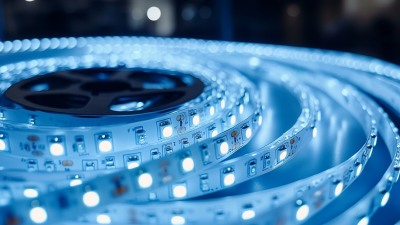
Choosing the best LED strip lights in 2026 is less about finding the brightest option and more about matching the strip to your space. A kitchen counter needs clear, comfortable task lighting; a bedroom shelf may benefit from softer, adjustable color. Small details matter. Check brightness, measured in lumens, and color temperature before comparing products. For accurate-looking food, fabrics, and finishes, look for a high color rendering index, or CRI.
The right Led Strip also depends on where and how you plan to install it. Measure each run, note the marked cut points, and confirm that the power supply supports the strip’s voltage and total wattage. For bathrooms, covered patios, or other damp areas, check the product’s IP rating and follow the manufacturer’s installation guidance. Indoor strips are not automatically suitable outdoors. Control options deserve attention, too: app-based features can be useful, but they may add setup steps or depend on a stable connection.
There is no single winner for every room. A premium strip can still disappoint if its color looks harsh or its adhesive releases from a dusty surface. I’ve found that planning the mounting surface and power route can matter as much as the light itself. This guide compares key specifications, practical features, and common trade-offs, helping you choose with fewer surprises. Read the labels closely. A little measuring now can prevent awkward gaps and unnecessary returns later.
Define Your Lighting Needs and the Spaces to Illuminate
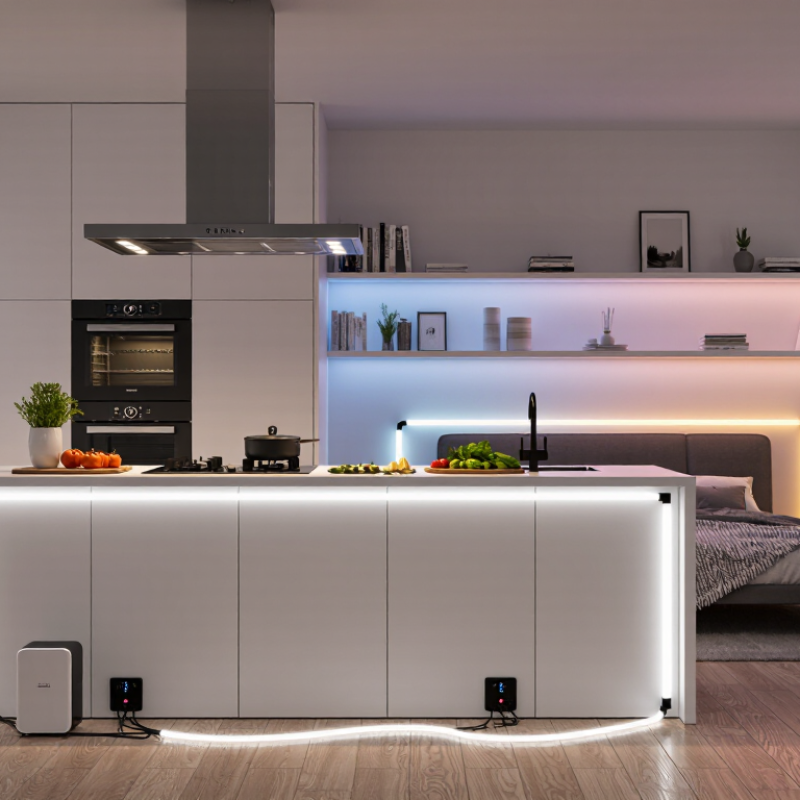
Before comparing LED strip lights, decide what each space needs. A living room may benefit from a soft glow behind a shelf, while a desk needs steady light that makes reading easier. Measure twice. Record the strip length, power-supply location, and cable path. A quick sketch can reveal corners, shelves, and gaps that product photos do not show. Decide whether the strip should stay hidden or become a visible design feature.
Match brightness and color to the task. Warm white often feels comfortable in bedrooms; a more neutral white can help with detailed work. Check color-rendering information if you need clothing, food, or artwork to look natural. Kitchens and bathrooms need extra care: choose a strip with a suitable moisture rating for its location, and follow installation guidance. Confirm that the dimmer and power supply work with the strip, and check the recommended maximum run length. A plan can still be imperfect once installed; test a short section in place before committing to the full layout. I would not assume brighter is better. Too much light can create glare on glossy counters or screens.
Compare Brightness, Color, and LED Strip Types
Brightness, color, and construction matter more than a dramatic product photo. Check lumens per meter, not just total lumens, because strip length changes the result. For a desk or shelf, moderate output often feels comfortable. Under kitchen cabinets, brighter light can reveal crumbs and knife marks clearly. That may be useful, but it can also cause glare on glossy counters. Test a short section before fixing the full run.
Color temperature shapes the room. Warm white, around 2700K to 3000K, gives bedrooms and timber shelves a softer look. Neutral white suits work areas where colors need to appear less yellow. Cool white can feel crisp, though it may look harsh at night. For colored effects, RGB strips mix red, green, and blue; their white setting may look less natural than dedicated white LEDs. RGBW models add a separate white channel. Check the actual white output, not only the color options.
Strip types also differ in control and light quality. Single-color strips are straightforward and often easier to dim smoothly. Addressable strips can show moving patterns, but they need compatible controllers and more setup. Higher LED density usually reduces visible gaps when the strip sits close to a surface. I have found that diffuser depth changes the result more than expected. A shallow channel may still show dotted light. Measure the space, confirm the power supply matches the strip, and leave room for ventilation. I once underestimated that detail.
Check Power, Controls, and Smart Home Compatibility
How to Choose the Best LED Strip Lights in 2026?
Check the strip’s power draw per metre and multiply it by the length you plan to install. Then compare that total with the power supply’s rated output. A little headroom helps avoid running the supply at its limit, but follow the manufacturer’s specifications. Long runs can also lose brightness toward the far end. Look for guidance on maximum run length or power injection. Check the numbers before cutting.
Controls affect everyday comfort. Confirm that the dimmer works with the strip type, especially if you want smooth low-level lighting without flicker. A physical switch can be useful when your phone is elsewhere. For kitchens, test whether the controller remembers its last setting after power is interrupted. Small details matter.
For smart home use, check the connection method and supported platform before buying. Some controllers need a hub; others connect directly to your home network. Verify that your router, app, and voice assistant support the same setup. Compatibility claims can be vague, so read the technical details rather than relying on a “smart” label. I’d also check what happens when the internet goes down. Remote features may stop, while a local switch should still work. That distinction is easy to miss.
How to Choose the Best LED Strip Lights in 2026? - Check Power, Controls, and Smart Home Compatibility
| Use case | Typical strip type | Power and voltage | Controls to consider | Smart-home compatibility | Before buying |
|---|---|---|---|---|---|
| Under-cabinet task lighting | Single-color white; select a suitable color temperature, such as 2700–3000 K for warm light or 3500–4000 K for a more neutral work area. | Commonly 12 V or 24 V DC. Compare the listed watts per meter and calculate total load from strip length. | A dimmer or wall control is often sufficient. Check that the controller matches the strip’s voltage and dimming method. | Smart control is optional. If needed, confirm whether control is direct over Wi-Fi, through a hub, or through a separate compatible controller. | Check color-rendering information (CRI), diffuser compatibility, mounting surface, and whether the power supply is included. |
| Ambient room lighting | Tunable-white strip for adjustable warm-to-cool white light, or RGBW strip when both color effects and a dedicated white channel are desired. | Often 24 V DC for longer installations. Power needs vary by model; use the manufacturer’s watts-per-meter rating for the exact strip. | Look for smooth dimming, adjustable white temperature, schedules, and saved scenes if these features matter. | Verify the exact protocol and required hub or controller. A wireless connection alone does not guarantee compatibility with every smart-home platform. | Confirm whether the white light comes from dedicated white LEDs or is mixed from color LEDs; dedicated white LEDs generally provide more useful white illumination. |
| Color effects and entertainment | RGB strip for one color across the strip at a time; addressable RGB strip for independently controlled sections or pixels. | Check the rated voltage, watts per meter, and maximum supported run. Addressable strips may have additional controller and data-line requirements. | Choose an app, remote, or controller with the effects you will use. Music or screen synchronization may require extra hardware or software. | Confirm whether the controller supports the intended platform and whether scenes, color control, and voice control are available through that connection. | Check LED direction, cut points, connector type, controller data compatibility, and whether the kit includes a correctly rated power supply. |
| Bathroom or covered outdoor use | A strip and connectors with an ingress-protection rating suited to the actual exposure; the rating of the complete installation depends on all components and connections. | Low-voltage 12 V or 24 V DC strips are common. Keep the power supply and connections appropriate for their installation location. | A sealed or suitably located controller may be needed. Keep unprotected controls and power supplies away from moisture. | Check the controller’s operating environment and wireless coverage at the installation point, not just the strip’s rating. | Match the IP rating to exposure, and check whether cutting or joining the strip affects its moisture protection. Follow local electrical requirements. |
| Long or multi-section installation | Usually a 24 V strip is worth considering; suitability depends on the strip’s power, layout, and manufacturer’s maximum-run guidance. | Size the supply using total strip wattage: watts per meter × total meters. Allow headroom within the power supply’s rated output and follow its instructions. | Consider multiple controller zones, compatible amplifiers, or power feeds where needed. Do not exceed controller output limits. | Check the maximum number of devices or zones supported and whether all sections can be grouped or controlled together. | Plan for voltage drop, which can cause brightness or color differences along a long run. Follow the manufacturer’s guidance on run length, wire gauge, and power injection. |
Specifications vary by product. Verify the strip, controller, power supply, connectors, and smart-home requirements together before purchase.
Match Strip Features to Installation Conditions
Choose an LED strip by the conditions where it will operate, not just by its brightness. For a dry bedroom shelf, a standard indoor strip may be enough. Near a sink, patio, or damp utility area, check the strip’s stated water-resistance rating and protect its cut ends and connectors. A rating applies under specific conditions; it does not make every joint waterproof. Warm surfaces, trapped heat, and weak adhesive can shorten service life, so use a suitable mounting channel when the strip needs support or heat control.
Measure the route before buying. Corners, cabinet gaps, and power-supply placement affect the usable length. Check where the strip can be cut, and leave room to connect each section without bending it sharply. Longer runs may show uneven brightness, especially near the far end; confirm the recommended run length and voltage requirements for the chosen setup. If you want dimming, verify that the controller, power supply, and strip are compatible. Small mismatches can cause flicker.
Tips: Clean the mounting surface and let it dry before installation. Test the strip while it is still accessible, then secure it. One detail is easy to overlook: a glossy tile may look smooth but still release adhesive over time. A channel can help, though it adds cost and takes more space.
Evaluate Safety, Durability, and Overall Value
How to Choose the Best LED Strip Lights in 2026?
A good choice starts with safety, not color effects. Check that the strip and power adapter carry recognized safety certifications for your region. Match the adapter’s voltage to the strip, and leave room for ventilation around it. Trapped heat can shorten LED life or damage nearby surfaces. Never cover a powered strip with fabric or insulation. Heat matters.
Durability affects value over time. For kitchens or bathrooms, look for a suitable moisture-resistance rating, but remember that sealed strips may be harder to repair. Inspect the adhesive backing and connectors; weak adhesive can peel from dusty or textured surfaces. A longer warranty can help, though it does not guarantee easy replacement. Compare the total kit cost, power use, brightness, and expected lifespan rather than judging by price alone. Some specifications are difficult to compare across sellers, so treat unusually impressive claims with caution.
Tips: Clean and dry the mounting surface before installation. Test the full strip before sticking it in place, especially around corners. Keep the adapter accessible, and avoid sharp bends. If a strip feels unusually hot, switch it off and check the setup.
Related Posts
-
Maximizing Value with Led Strip Lights Through Effective Maintenance and Care Techniques
-

World Class Manufacturing Shining Bright with Best Parking Lot Lights Exported from China
-
Top 10 Best LED Strip Lights for Every Home and Project?
-
Global Solutions for Best Parking Lot Lights from a Powerful Chinese Manufacturer
-
Exploring the Benefits of Exceptional After Sales Support and Maintenance Costs in the Future of LED Light Panels
-
Ultimate Guide to Choosing the Best Strip Lights for Your Home and Business