
How to Choose Industrial LED Lighting for Global Projects
Industrial Led Lighting is becoming a strategic decision for factories, warehouses, ports, and processing plants worldwide. The International Energy Agency reports that lighting represents approximately 15% of global electricity consumption. That figure makes efficiency important, but energy savings alone cannot define a reliable project.
James R. Brodrick, former U.S. Department of Energy Solid-State Lighting Program Manager, stated, “Solid-state lighting has the potential to transform the way we light our world.” His observation remains relevant when selecting equipment for different climates, voltage systems, and operating schedules. The U.S. Department of Energy’s Solid-State Lighting research has also documented major improvements in LED efficacy, lifetime, and controllability. However, product claims still need careful verification.
Look beyond wattage.
A global specification should examine photometric performance, maintained illuminance, glare, color rendering, flicker, surge protection, and thermal management. In a dusty warehouse, an IP66 fixture may be more practical than a cheaper indoor model. Near a cold storage room, starting performance and enclosure materials deserve attention. In a humid coastal plant, corrosion resistance can determine the real service life.
Independent LM-79 and LM-80 data can support performance decisions, while local certification requirements must be checked before shipment. Controls may reduce consumption further, especially with occupancy sensors and daylight dimming. Yet controls can fail when commissioning is rushed or workers find them inconvenient.
No checklist is perfect.
Project teams should compare measured results, warranty terms, replacement access, and local technical support. The best Industrial Led Lighting solution is not always the most efficient on paper. It is the system that remains safe, maintainable, compliant, and effective after years of demanding operation.
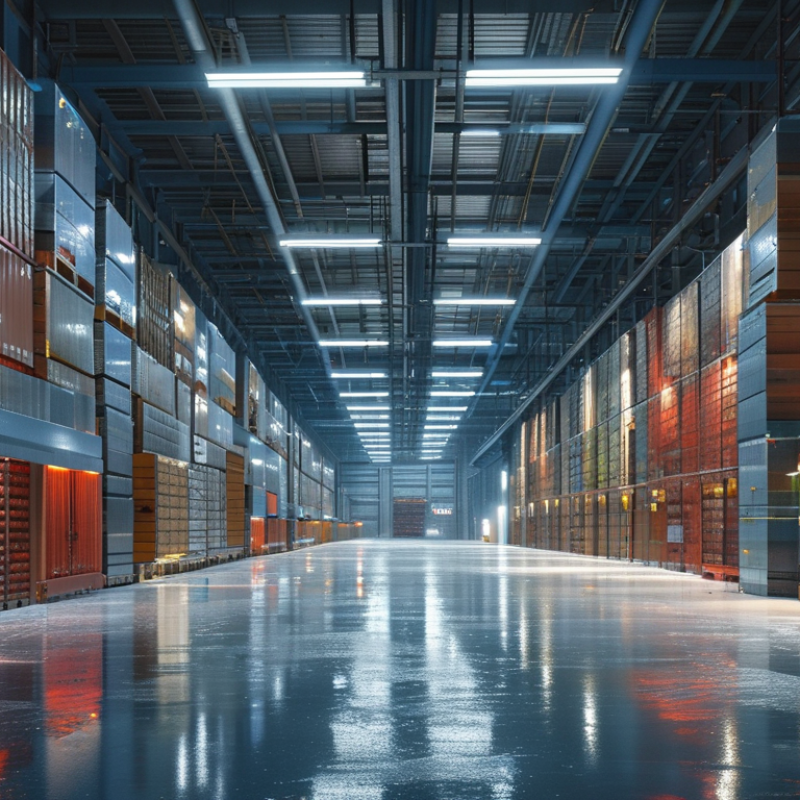
Define Project Requirements for Industrial LED Lighting
Before selecting industrial LED lighting for a global project, define the working environment precisely. Record ceiling height, mounting points, operating hours, ambient temperature, humidity, dust, and chemical exposure. A warehouse may need broad, uniform illumination, while a machining area requires controlled light around moving equipment. Measure existing light levels with a calibrated meter, not by visual judgment alone. Eyes can mislead.
Specify the required illuminance, color temperature, color rendering, glare control, and emergency operation. Production lines may need accurate color recognition, while storage aisles often prioritize uniformity and safe movement. Check voltage, frequency, control protocols, and backup power conditions in each target country. Regional installation practices can differ. Confirm local certifications and documentation with qualified electrical professionals before procurement.
Tips: Create a room-by-room schedule with dimensions, task types, target lux levels, mounting heights, and maintenance access. Request photometric files and review a realistic lighting simulation. Include dust buildup, lumen depreciation, and replacement time in the design. A lower initial price may create higher service costs later. Leave room for revision; site conditions are sometimes different from drawings. Test one representative area before approving a full installation. Record the result with measured lux values and photographs.
| Requirement Dimension | Project Condition or Application | Recommended Target | Selection Guidance | Verification Data to Request |
|---|---|---|---|---|
| Lighting Level | General warehouse aisles and storage areas | Approximately 100–200 lux maintained illuminance | Use the applicable local lighting standard and confirm the required uniformity. Higher levels may be needed for detailed picking or inspection tasks. | Photometric calculation, maintained illuminance, uniformity ratio, mounting height, spacing and maintenance factor. |
| Lighting Level | Manufacturing, assembly and routine production areas | Approximately 300–500 lux maintained illuminance | Select the level according to task detail, worker age, production speed and surface reflectance. Avoid excessive brightness that can create glare. | Lighting layout, average and minimum illuminance, uniformity, glare assessment and task-area measurement points. |
| Lighting Level | Quality inspection, precision assembly and detailed visual work | Approximately 750–1,000 lux maintained illuminance | Specify the requirement for the actual inspection plane. Supplementary task lighting may be more efficient than increasing the entire room lighting level. | Task-plane photometric report, color quality data, glare control details and dimming or task-lighting strategy. |
| Mounting Height | Low-bay industrial spaces | Up to approximately 6 m | Broad beam distributions are generally suitable when the mounting height is low and the work area is open. | Mounting height, beam angle, fixture spacing, calculated uniformity and photometric file. |
| Mounting Height | High-bay warehouses and production halls | Approximately 6–15 m | Use high-bay optics selected for rack layout, aisle width and mounting height. Narrower distributions can reduce spill light in tall spaces. | IES or LDT photometric file, high-bay layout, aisle illuminance, vertical illuminance and glare evaluation. |
| Environment | Dusty, humid or washdown-prone areas | IP65 minimum; IP66 where powerful water jets are expected | Ingress protection must match the cleaning method and exposure level. Sealed housings, suitable gaskets and corrosion-resistant materials are important. | Ingress-protection test evidence, cleaning method, chemical exposure information, housing material and gasket specification. |
| Mechanical Protection | Areas exposed to impact from equipment, pallets or tools | Select an IK rating appropriate to the impact risk | Higher IK ratings provide greater resistance to mechanical impact, but the required rating should be based on a documented site-risk assessment. | IK test classification, impact-risk assessment, lens material, guard requirement and installation height. |
| Ambient Temperature | Cold storage, hot process zones or outdoor industrial areas | Project-specific operating range, commonly around −30°C to +50°C | Confirm the complete luminaire and driver operating range. Thermal performance can affect LED output, service life and control reliability. | Ambient operating range, measured case temperature, lumen-maintenance data, driver rating and thermal test results. |
| Color Quality | General industrial work and warehouse circulation | CCT commonly 4,000–5,000 K; CRI typically ≥80 | Neutral white light supports visual clarity in many industrial environments. Avoid selecting color temperature based only on appearance. | Correlated color temperature, color rendering index, color consistency tolerance and spectral or color-quality report. |
| Glare Control | Workstations, aisles and areas with direct lines of sight | Use a glare limit required by the applicable project standard | Optics, shielding, mounting orientation and brightness distribution should be assessed together. A lower glare rating may be necessary for computer-based work. | UGR or equivalent glare assessment, shielding angle, luminance data and rendered installation view. |
| Electrical Supply | Projects spanning different countries or utility systems | Confirm local voltage, frequency, phase and surge conditions | Specify the actual supply range rather than relying only on a nominal voltage. Check compatibility with emergency circuits, generators and existing wiring. | Input-voltage range, frequency, power factor, total harmonic distortion, inrush current and surge-protection level. |
| Energy Performance | High operating hours and large installed lighting loads | Compare delivered lumens per watt at project operating conditions | Evaluate system efficacy, controls, dimming behavior and operating hours together. The highest nominal efficacy may not deliver the lowest total energy use. | Measured luminaire wattage, delivered lumens, efficacy, dimming curve, control schedule and annual energy estimate. |
| Controls | Warehouses with variable occupancy or daylight availability | Occupancy sensing and daylight dimming where practical | Controls should be compatible with the project wiring, commissioning process and maintenance capabilities. Define default behavior after power loss. | Control protocol, sensor coverage, dimming range, response time, commissioning requirements and failure-mode behavior. |
| Emergency Lighting | Facilities requiring safe evacuation during power failure | Design to local emergency-lighting and life-safety requirements | Emergency lighting is a separate compliance requirement from normal illumination. Confirm duration, test method, escape-route coverage and battery arrangement. | Emergency lighting calculations, rated duration, battery specifications, test records and local compliance documentation. |
| Maintenance Planning | Remote sites or facilities with limited access | Use a documented maintenance factor and long-life components | Plan for cleaning, component replacement, access equipment and spare units. LED lifetime should be evaluated with lumen maintenance and failure-rate data. | LM-80/TM-21 or equivalent lumen-maintenance evidence, rated life conditions, replacement parts list and maintenance schedule. |
| Global Compliance | Projects involving multiple countries or export destinations | Meet the applicable electrical, EMC, safety and environmental rules | Compliance requirements vary by destination, installation environment and product category. Establish the required documentation before final selection. | Declarations of conformity, safety and EMC test reports, photobiological safety data, environmental declarations and local certification records. |
| Planning note: Illuminance values shown are typical preliminary design ranges, not universal legal requirements. Final values, uniformity, glare limits, emergency provisions and product certifications must be confirmed against the applicable local codes, project specifications and site conditions. | ||||
Related Posts
-
Top 10 Commercial Outdoor Lighting Solutions for Your Business?
-

Top Commercial Outdoor Lighting Solutions for Your Business Needs?
-
How to Optimize Energy Efficiency in Industrial Led Lighting Systems for Maximum Cost Savings
-
5 Key Advantages of LED Lighting Solutions for Global Buyers in 2023
-
Maximizing Return on Investment with LED Light Panels through Superior Support and Cost Efficient Repairs
-
Top 10 LED Light Bulb Manufacturers from China at the 137th Canton Fair