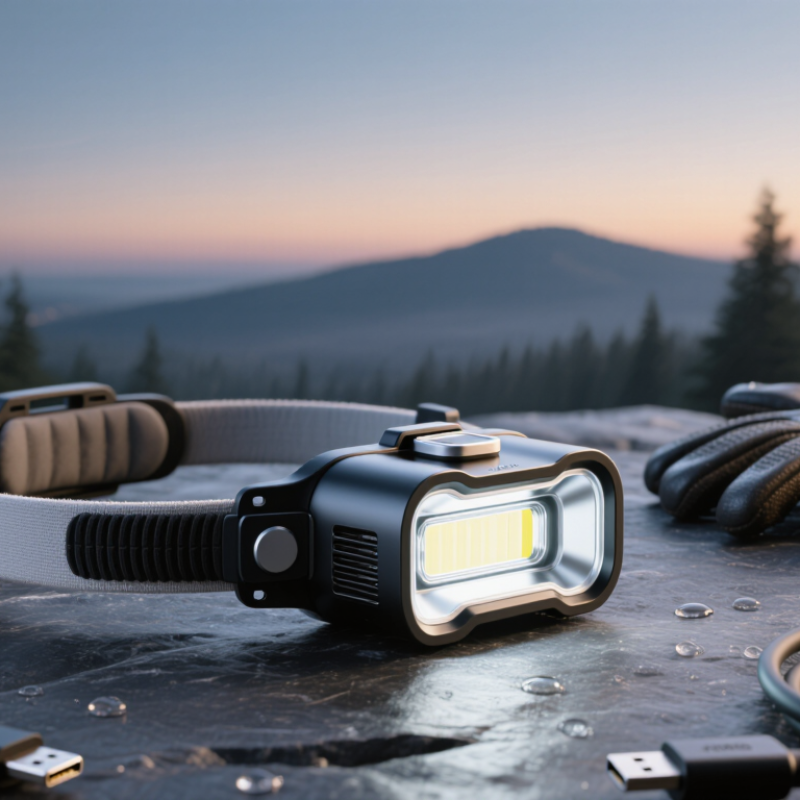
2026 Best Hot Sale Rechargeable Headlamp for Global Buyers?
The 2026 buying season is reshaping how outdoor professionals evaluate portable lighting. Grand View Research estimates that the global headlamp market will continue expanding through 2030, supported by hiking, industrial maintenance, emergency preparedness, and night-time recreation. Its analysis also highlights LED efficiency and rechargeable power as important development trends. However, market forecasts differ by research firm, so buyers should treat growth figures as directional, not guaranteed.
This guide examines the Hot Sale Rechargeable Headlamp through practical evidence, not attractive packaging alone. Real-world performance depends on measured lumens, beam distance, runtime, charging stability, headband comfort, and weather resistance. ANSI/PLATO FL 1 testing can improve comparability between lighting products, while IP ratings help buyers understand protection against dust and water. A bright lamp is not always a better lamp.
Safety matters globally. IEC 62133-2 is widely referenced for rechargeable lithium battery safety, and UN 38.3 testing supports safer battery transport. Buyers should still verify documentation, regional labeling, charger compatibility, and responsible recycling requirements. The IEA’s Global Critical Minerals Outlook 2024 also shows why battery supply chains deserve closer attention, especially as demand for energy-storage products rises. Small details matter.
Field experience reveals uncomfortable gaps. Advertised runtime may use the lowest brightness setting, not the setting workers actually need. Cold weather can reduce battery performance. Wet gloves can make a small switch frustrating. This overview compares suitable models for distributors, contractors, outdoor retailers, and global procurement teams, while acknowledging that no single headlamp fits every climate, task, or budget.
What Makes a Rechargeable Headlamp a 2026 Global Hot-Sale Product
A rechargeable headlamp becomes a global hot-sale product when it solves ordinary problems without adding friction. Buyers want reliable light for camping, repairs, travel, cycling, and emergency preparation. A bright beam matters, but comfort often matters more. A heavy lamp quickly becomes annoying after one hour. An adjustable strap, balanced weight, and soft forehead contact can influence repeat purchases.
Charging convenience is equally important. A widely compatible USB-C port supports homes, vehicles, power banks, and workplace equipment. Clear battery indicators reduce unpleasant surprises in dark environments. Practical buyers also examine runtime at different brightness levels, not only the highest lumen figure. A useful product should offer a focused beam for distance and a softer beam for nearby tasks. Simple controls help users wearing gloves.
Durability builds trust across different climates. Water resistance, impact protection, and stable performance in cold conditions deserve careful testing. Manufacturers should publish measured runtime, charging details, battery capacity, and safety information in plain language. Independent testing can strengthen these claims. Still, no headlamp performs perfectly in every situation. Maximum brightness may drain the battery quickly, while compact models may sacrifice runtime. That trade-off needs honest communication. Some buyers may also expect replaceable batteries, which many sealed designs do not provide. This remains an important weakness for long-term use and waste reduction.
Key Features and Technologies in the Best Rechargeable Headlamps
For 2026 global buyers, the best rechargeable headlamp should balance brightness, comfort, and dependable battery performance. In field use, a stable fit matters as much as maximum lumens. A 90-degree adjustable lamp helps direct light toward tools, steps, or trail signs. The headband should resist sweat without creating pressure points. Small detail. A soft rear section improves comfort during long evening repairs.
Rechargeable performance depends on battery quality and charging control. USB-C input makes charging easier across different countries and workplaces. A clear battery indicator prevents unexpected darkness during inspections. Built-in protection should help control overcharging, overheating, and deep discharge. Lithium batteries offer strong energy density, but cold weather can reduce runtime. I have seen bright lamps lose power quickly below freezing. That limitation deserves honest attention. Buyers should check charging instructions and local electrical certification requirements.
Optical design also shapes real-world usefulness. A wide flood beam can illuminate a workbench, while a focused beam helps identify distant trail markers. Multiple brightness levels reduce glare and conserve energy. Red light can protect night vision around campsites or vehicle interiors. Motion sensors are convenient when hands are dirty, but accidental activation can drain the battery. Water resistance is valuable in rain, yet the stated IP rating should be verified rather than assumed. Heat management matters too, because a compact lamp may dim when operated at maximum output for extended periods.
How to Compare Brightness, Battery Life, Comfort, and Durability
2026 Best Hot Sale Rechargeable Headlamp for Global Buyers?
Brightness should be judged beyond the advertised lumen number. A focused beam helps users inspect distant paths, while a wide beam suits repairs and warehouse work. Compare brightness levels, beam distance, and color consistency. Test the lamp in darkness, not only indoors. A useful headlamp should offer several modes without forcing users into excessive brightness. That can waste power quickly.
Battery life needs practical testing. Check runtime at the brightness level people will actually use. A lamp claiming twelve hours may provide far less at its highest setting. USB-C charging is convenient, but charging speed and battery indicators matter too. Cold weather can reduce performance. I once trusted a simple percentage display, but it dropped sharply near empty.
Comfort often decides whether a headlamp stays in use. Look for balanced weight, a soft adjustable strap, and controls that work with gloves. The lamp should not press against the forehead during long tasks. Durability requires more than a tough-looking shell. Check water resistance, impact protection, hinge strength, and charging-port coverage. Small gaps can become serious after rain or dust exposure. Product testing should include repeated drops, wet handling, and strap adjustments, although these tests rarely match every user’s conditions.
Global Safety Standards, Certifications, and Market Requirements
2026 Best Hot Sale Rechargeable Headlamp for Global Buyers?
Global buyers now expect more than brightness and battery capacity. Mordor Intelligence estimates the global headlamp market will exceed USD 1 billion in 2025, supported by outdoor recreation, industrial work, and emergency preparedness. This growth raises compliance pressure. A rechargeable headlamp should be tested against IEC 60598-1 for luminaire safety and IEC 62471 for photobiological risks. Beam intensity matters. A powerful LED can still create unsafe glare at close range.
Ingress protection is equally practical. An IPX4 rating supports rain resistance, while IPX7 indicates temporary immersion protection under defined test conditions. Buyers should request laboratory reports, not only printed claims. Lithium batteries also require UN 38.3 transport testing, with documented protection against overheating, short circuits, and overcharging. For European distribution, CE requirements may involve EMC, RoHS, REACH, and battery obligations. Wireless versions can require additional radio compliance. Requirements vary by destination.
North American importers may request FCC evidence for electronic emissions and recognized safety testing. UK shipments can involve separate marking and documentation duties. The 2024 Global Battery Alliance reporting highlights growing attention to battery traceability and responsible supply chains. That expectation is not always easy for small suppliers. Packaging should show charging input, battery chemistry, warnings, and disposal instructions in the local language. Independent inspection remains useful, because a certification file can pass while production changes quietly reduce sealing quality. Certification is evidence, not perfection.
2026 Best Hot Sale Rechargeable Headlamp for Global Buyers? - Global Safety Standards, Certifications, and Market Requirements
Practical compliance and market-entry reference for rechargeable LED headlamps. Requirements may vary according to the product design, battery chemistry, included charger, sales channel, and destination country.
| Market or Scope | Requirement Area | Standard, Regulation, or Marking | What It Covers for a Rechargeable Headlamp | Typical Evidence for Buyers or Importers |
|---|---|---|---|---|
| Global | Photobiological safety | IEC 62471 Photobiological safety of lamps and lamp systems | Evaluates optical radiation hazards from LED light sources, including retinal blue-light risk and thermal hazards. The applicable risk group should be determined from the finished headlamp at the intended viewing distance and operating modes. | Optical safety test report, LED data, risk-group assessment, and user instructions where required. |
| Global | Electrical and lighting safety | IEC 60598-1 General requirements and tests for luminaires | Provides a recognized framework for construction, insulation, wiring, abnormal operation, mechanical protection, marking, and testing of luminaires. The exact product category and applicable part of the IEC 60598 series should be confirmed by a qualified laboratory. | Safety test report, construction review, component records, and production inspection records. |
| Global | Ingress protection | IEC 60529 IP Code | Verifies protection against solid objects and water. A claim such as IPX4, IPX6, or IPX7 must match the actual test level; a water-resistance claim should not be used as a substitute for a documented IP test. | Accredited IP test report, sealed enclosure design, and user instructions stating test limitations. |
| Global | Rechargeable lithium battery safety | IEC 62133-2 Portable sealed secondary lithium cells and batteries | Addresses safety risks such as electrical abuse, mechanical abuse, molding stress, and abnormal charging for portable rechargeable lithium cells and batteries. It does not replace transport testing or market-specific product requirements. | Battery or cell test report, protection-circuit information, safety data, and traceable battery identification. |
| Global transport | Lithium battery transport | UN 38.3 UN Manual of Tests and Criteria, Part III, Sub-section 38.3 | Required for applicable lithium cells and batteries offered for transport. Tests include altitude simulation, thermal, vibration, shock, external short circuit, impact or crush as applicable, overcharge, and forced discharge. | UN 38.3 test summary, battery specification, watt-hour rating, packaging instructions, and transport classification. |
| European Union and EEA | General product safety | Regulation (EU) 2023/988 General Product Safety Regulation | Applies to consumer products placed on the EU market where no more specific EU safety legislation fully covers the relevant risk. It requires safe products, risk analysis, technical documentation, traceability, corrective action procedures, and appropriate safety information. | Product risk assessment, technical file, batch or serial traceability, responsible economic operator details, and recall process. |
| European Union and EEA | Electromagnetic compatibility | Directive 2014/30/EU EMC Directive | Applies to equipment capable of generating or being affected by electromagnetic disturbance. A rechargeable headlamp with electronic switching, charging, or control circuitry may require emissions and immunity assessment. | EMC test report, technical documentation, EU Declaration of Conformity, and CE marking where applicable. |
| European Union and EEA | Restriction of hazardous substances | Directive 2011/65/EU RoHS, including Commission Delegated Directive (EU) 2015/863 | Restricts specified substances in electrical and electronic equipment, including lead, mercury, cadmium, hexavalent chromium, certain flame retardants, and four phthalates, subject to exemptions and scope rules. | Material declarations, supplier compliance records, laboratory screening where needed, and EU Declaration of Conformity. |
| European Union and EEA | Chemicals and articles | REACH Regulation (EC) No 1907/2006 SVHC communication obligations | Requires control of substances used in materials and articles. If an article contains a Candidate List substance above the applicable threshold, information duties may apply, including communication to professional customers and consumers. | Material composition declarations, supplier questionnaires, SVHC assessment, and customer communication records. |
| European Union and EEA | Batteries and battery waste | Regulation (EU) 2023/1542 Batteries and waste batteries | Covers batteries placed on the EU market, including labeling, producer responsibility, collection and recycling obligations, and information requirements. Requirements depend on the battery type, capacity, and whether the battery is incorporated into or supplied with the product. | Battery labeling review, producer-registration records, recycling information, and required technical documentation. |
| European Union and EEA | Low-voltage electrical safety | Directive 2014/35/EU Low Voltage Directive | Generally covers equipment with input or output voltages between 50–1,000 V AC or 75–1,500 V DC. A low-voltage battery headlamp may fall outside the directive, while an included mains charger or power supply may fall within its scope. | Scope assessment, charger safety report where applicable, EU Declaration of Conformity, and CE marking where applicable. |
| United Kingdom | Product and electrical compliance | UK product regulations UKCA or accepted CE routes, depending on the applicable legislation and Great Britain transition rules | Products supplied to Great Britain must meet applicable UK legislation. EMC, electrical safety, RoHS, battery, packaging, and general product-safety obligations may apply separately. Northern Ireland has distinct arrangements under the Windsor Framework. | UK or accepted conformity documentation, technical file, importer details, labeling review, and current-market marking assessment. |
| United States | Radio-frequency emissions | FCC Part 15 Unintentional radiators, where applicable | May apply when the headlamp contains digital electronics, a switching circuit, Bluetooth, wireless control, or another RF-generating function. The applicable FCC authorization path depends on the product configuration. | FCC test report or authorization records, user information, and identification of incorporated RF modules where relevant. |
| United States | Consumer product safety and labeling | CPSC requirements Applicable federal consumer-product rules | Requires the product to be reasonably safe and accurately labeled. Specific obligations can arise from battery design, small parts, packaging, charging accessories, lighting performance claims, or incident reporting. | Hazard analysis, test records, corrective-action procedure, complaint monitoring, and compliant packaging and instructions. |
| Canada | Radio and digital equipment compliance | ISED Canada Applicable radio and interference requirements | Wireless or digital headlamps may require compliance with applicable Canadian radio-equipment and interference standards. Requirements depend on whether the product contains a transmitter, receiver, or digital apparatus. | Canadian test report, certification or declaration records where required, and compliant user information. |
| Australia and New Zealand | Electrical equipment and EMC | RCM framework Electrical safety and EMC requirements | The applicable pathway depends on whether the headlamp or supplied charger is a prescribed electrical article and whether the equipment is an intentional or unintentional radiator. Battery-only products and mains chargers may have different obligations. | Supplier declaration, EMC and electrical safety reports, registration records where required, and RCM labeling assessment. |
| Japan | Electrical appliance scope review | Electrical Appliance and Material Safety Act PSE applicability assessment | PSE obligations depend on the specific electrical appliance or material. A rechargeable headlamp and its separately supplied AC adapter should be assessed independently because the adapter may fall within a regulated category even when the low-voltage headlamp does not. | Product-scope determination, adapter compliance documents, Japanese labeling, and importer records where applicable. |
| China | Product safety and market access | Applicable GB standards and regulations CCC scope assessment where applicable | The exact requirements depend on whether the product is sold as a lighting product, electronic product, battery product, or with a mains charger. CCC is not automatically required for every rechargeable headlamp; scope must be checked against the current product catalog and applicable standards. | GB-standard test report, CCC certificate if in scope, Chinese labeling, battery documentation, and importer or manufacturer records. |
| All export markets | Performance claims | ANSI/PLATO FL 1 Common flashlight performance protocol | Provides commonly used methods for reporting beam distance, peak beam intensity, total light output, runtime, impact resistance, and water resistance. It is a performance-labeling protocol, not a universal legal safety certification. | Independent performance test report, defined test conditions, mode-by-mode runtime data, and claims consistent with the tested configuration. |
| All export markets | Charging and thermal protection | Engineering control Protection circuit and charging-system validation | A commercial rechargeable headlamp should control overcharge, over-discharge, short circuit, overcurrent, and excessive temperature. USB charging input, battery protection, thermal management, and waterproofing should be validated as one finished system. | Charging and abuse test records, protection-circuit specification, thermal test data, firmware-control records where applicable, and production inspection plan. |
| All export markets | User information and traceability | Market-specific labeling Warnings, ratings, instructions, and traceability | Instructions should state charging conditions, battery replacement or disposal information, operating limitations, water-resistance limitations, photobiological warnings where applicable, and the meaning of performance claims. | Final artwork, multilingual manual, packaging review, serial or batch coding, warranty terms, and after-sales complaint process. |

Buying Guide for Importers, Distributors, and Outdoor Enthusiasts
2026 Best Hot Sale Rechargeable Headlamp for Global Buyers?
Buying Guide for Importers, Distributors, and Outdoor Enthusiasts
For global buyers, a hot-sale rechargeable headlamp must solve real field problems, not only look bright. Importers should request test samples before discussing large orders. Check beam stability, switch response, charging time, and housing temperature. A 500-lumen claim means little without measured runtime. Ask for test data at several brightness levels. Short runs matter. A worker may need six hours, while a trail user may need only two. That difference changes the battery size, price, and packaging.
Distributors should examine supply consistency. Confirm battery cell type, replacement availability, carton dimensions, and production lead times. USB-C charging is convenient, but port sealing needs careful inspection. Rain enters through small gaps. Look for an IP rating supported by test records, not a printed label alone. Head straps should remain firm after repeated adjustment. I have seen comfortable samples become loose after weeks of use. This detail is easy to miss. Ask for drop, charging-cycle, and button-life records. Also verify required product documents for each destination market.
Outdoor enthusiasts can judge comfort quickly. Wear the lamp for thirty minutes, then bend forward and walk on uneven ground. A heavy front housing causes neck fatigue. Red light, lockout mode, and a low-power setting can improve campsite use. Importers should compare landed cost, warranty handling, and packaging damage rates, not factory price alone. Leave room for mistakes. Forecasts can fail when weather or seasonal demand shifts. A small pilot order often reveals more than a polished sales presentation.